
Primavera literally means “Spring.” Paccup 2026 starts July 6, that’s summertime.
The winning strategy is to have the boat, crew and details sorted by spring so you can focus on sailing and doing well this summer. Plus it’s supposed to be fun ! Don’t forget that. Even if your goals don’t include winning you will have more fun if you’re actually sailing the boat not chasing electrical gremlins, arbitrary deadlines, fighting traffic to get more somethings while everyone else is often enjoying the send off party sponsored by your own dear yacht club.
Seat goal,to have the boat crew and safety equipment finalized race ready by April 1st. It’s the perfect day. What kind of fool spends all those greenbacks when the wind is free?
Even if you miss your goal of April 1st and now it is May 1st that is the day the circuses used to hit the road so it still makes sense. May 1st still gives you time to slip your mooring lines and slip under the bridge to sort out details.
Race preparation breaks down into several categories if you are double handed then it’s easy to assign duties; it’s either up to you or your wing person. On larger boats you can spread the load to your crew’s strengths. Typically the foredeck ape takes charge of the sails and rigging. This is an important category aboard a sailing vessel.
Chow varies from freeze dried mush to steak and seafood depending ion what vessel you are aboard and what the plan is. Pressure cookers are popular speedy boatsto speed up cooking processes. Other vessels plan a daily cocktail hour and wine pairing with the main course Best to know if your expectations match the vessel’s chefs talents.
Navigation has changed since the days of sextants, HO 249’s , pilot charts, and plotting sheets. Now thanks to Elon and his cronies weather updates and wind predictions are available 24/7 and that coupled with powerful navigational software can easily show you in retrospect where you strayed off course. Charging systems and batteries to drive all this technology requires an individual that understands electrical wizardry. It may say “Plug n Play” but the reality seems to mean the definition of “Play” includes calibration , recalibration, rebooting and adjustment.The ability to connect, interpret and apply the technology available to your vessel is directly proportional to your chances of a podium finish.
Drive the oat! This seems obvious but it’s probably one of the biggest keys to success. This is exceedingly true if it’s windy, dark, the waves are large and you’re tired and in a hurry and yes well now it’s really dark.
Many modern vessels, Cal 40’s included, have the ability to actually surf these foamy blue Pacific rollers. Watching the knot meter, aka fun meter score double digits is fun for the whole crew. Heck I can remember scoring a Bo Derek at 10 knots! Top scores are not just osted on a prominent bulkhead or the log book anymore. Now all your intergoogle followers know who the Speed Queen is or not!
On the practical side, how much fuel do we need for charging? How much water does that machine make? How much extra water should we carry? How long does that much propane last? Did we bring a swim mask for clearing the rudder of fishing detritus. Some vessels go so far as to regulate crew caffeine intake and headphone use. These issue can create confusion and in order if pre race day were spent filling in check lists, drilling holes, cleaning winches , mounting hardware rather than actually sailing the vessel here and there.
If you’re still wondering what could possibly go wrong, consider this…My first Pacific crossing in 1982 to the area that was once Lahaina Maui, we planned and provisioned for 14days. The voyage actually took us 22 days. Yes, we learned a lot and became better sailors. One crew man lost his first wife to the percussionist in the house band at the condo while we were completing our extended voyage at sea. After the 22day trip I actually ran away from home ending up in Butte MT foa while, but hey Evel Knievel was from there so that is cool.
Now 44 years later and preparing for my 57th Pacific crossing the skipper had us practice the five weekends in May and June testing sails, gear drivers and sail changes. The boat was then hauled for two weeks before the race for bottom prep and to minimize the chances of us damaging something we couldn’t fix.
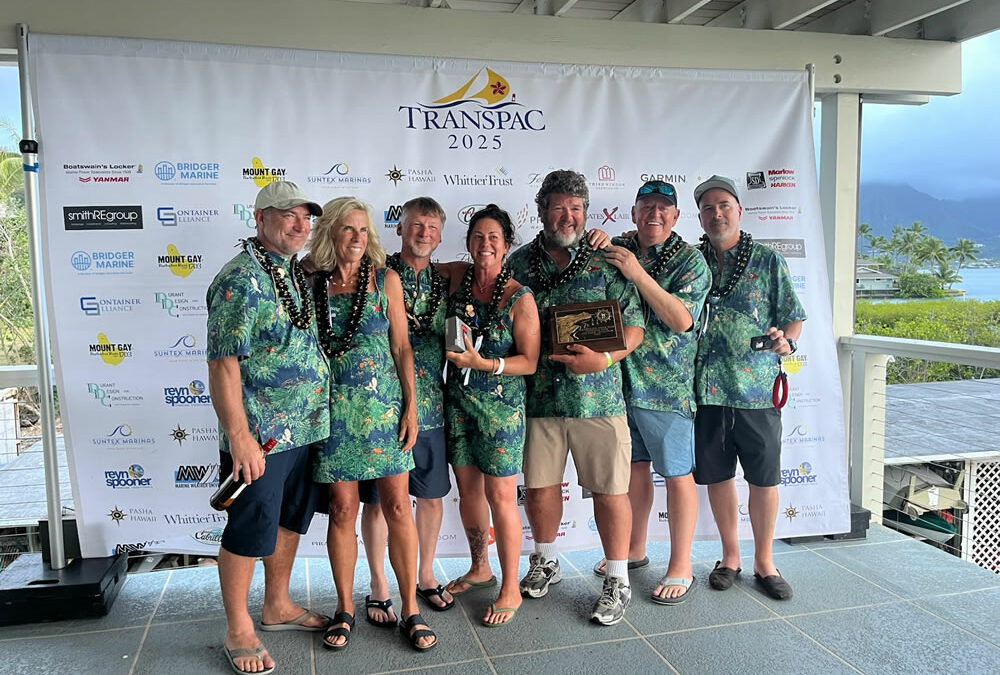
There were no divorces directly attributable to this trip and we won Transpac overall.
I still learned stuff and I think I always will.
Getting back to our lowly foredeck ape. Some sails are required and some sails help speed you along your way. Literally each pound aboard the vessel that isn’t required is slowing you down. Sails that never leave their bags are in this category. iN the pre start of that last Transpac our navigator determined via our latest weather update the #3 jib and the brand new Code 0 would not be utilized enough to justify the extra weight aboard.With less than 10 minutes to our scheduled starter passed these two sails off to a waiting powerboat. In contrast, during the next Transpac two years later aboard a certain schooner we carried well over a dozen sails and used everything except the storm canvas. As a side note we did use the storm jib as a sunshade on the way home . We slipped it over the boom and it worked very well. Probably the most hour spent under storm jib deployed in my career.
Talk to your sailmaker. Sometimes a sail can be modified or converted to do two job. One common trick is to add a 2nd high clew to a genoa to give it the ability to pull double duty as a blast reacher. It is also not uncommon to see salty seamen using their storm jib as a makeshift staysail. Speaking of staysails there are spinnaker staysail, genoa staysail storm stay sail even mizzen staysails.
Talk to your local sailmaker, determine your needs,. The foredeck ape usually just wants more. The spinnaker net is easily the most under rated and underutilized piece of ocean duty equipment aboard. You can probably make one yourself and never wrap a spinnaker around the forestay again. Yes they really are all that. Spinnaker wraps are so annoying and take hours to rectify. Get a spinnaker net and use it.
Learn how to adjust the brightness of you instruments and add a rheo stat to your compass light if you need it. Most sternlights reflect of the stern pushpit and need a plastic guard created.
The regatta requires you to send in a video of yourself doing a Crew Overboard recovery and deploying the emergency steering gear. Don’t edit this tape, really proveto yourself you can do it and your crew and vessel are ready. Assign a spotter, sound the alarm, press MOB, start engine in neutral, know the steps of your preferred recovery.
Empty the vessel only take what you need, seriously consider. I can almost understand 3 spare fuel filters but 3 spare oil filters seems excessive. You can never have too many USB outlets or stove lighters. Press the water on your crew and carry plenty of drink powder to get the crew hydrated. An extra starter and alternator are common considerations. Certainly an impeller or two and a belt.
Of course following jet contrails and just poling out a headsail will get you there but divorce is expensive and you’re better than that.